
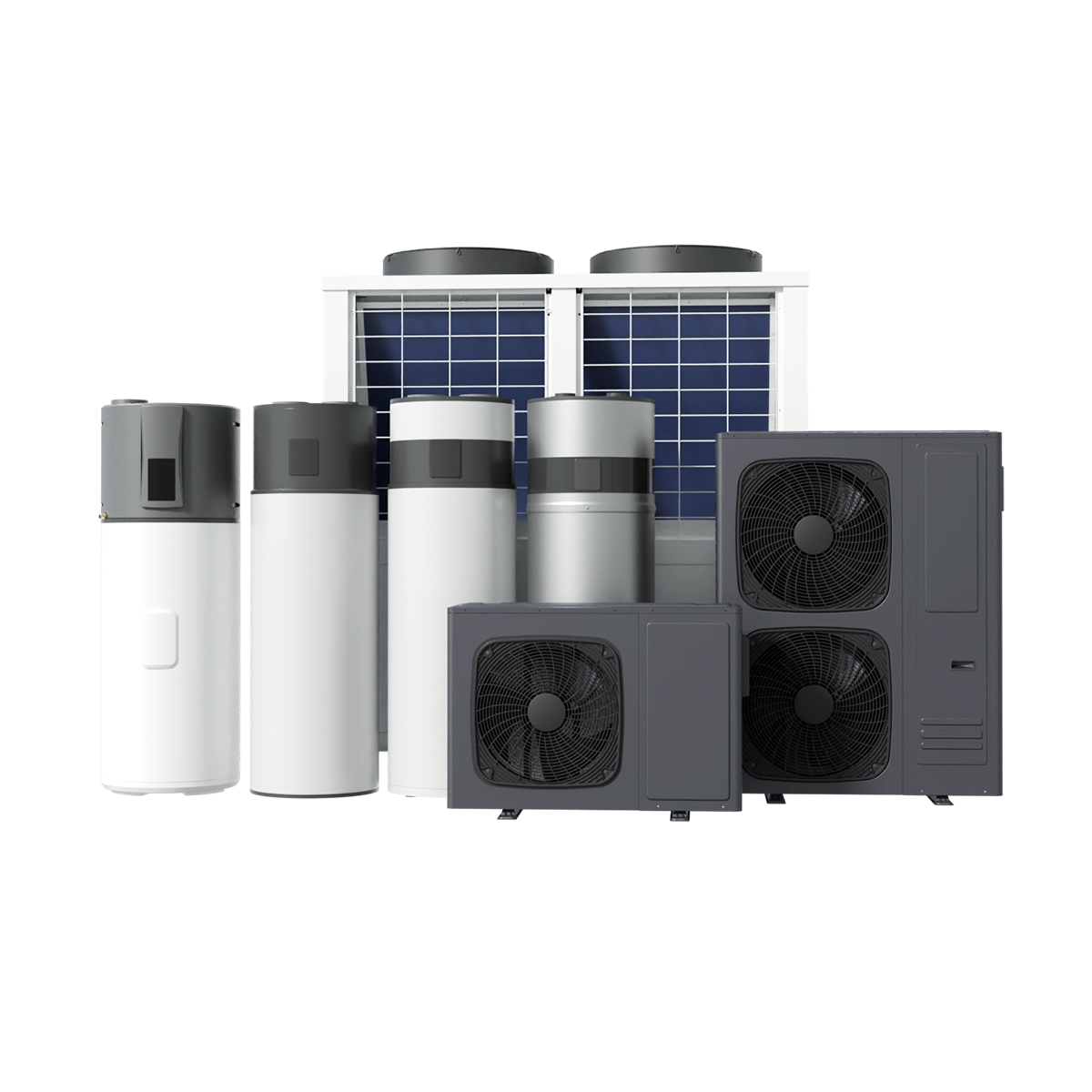
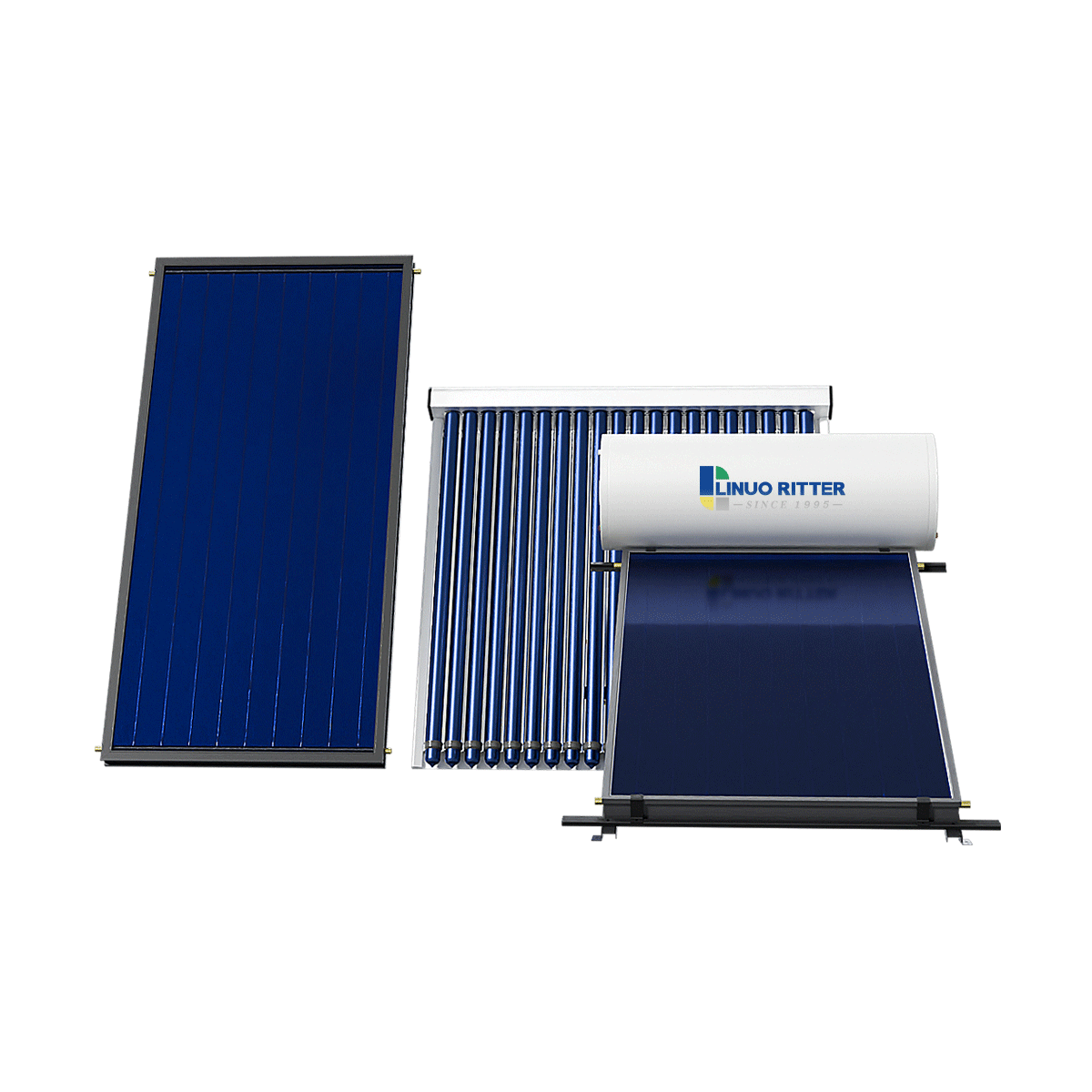
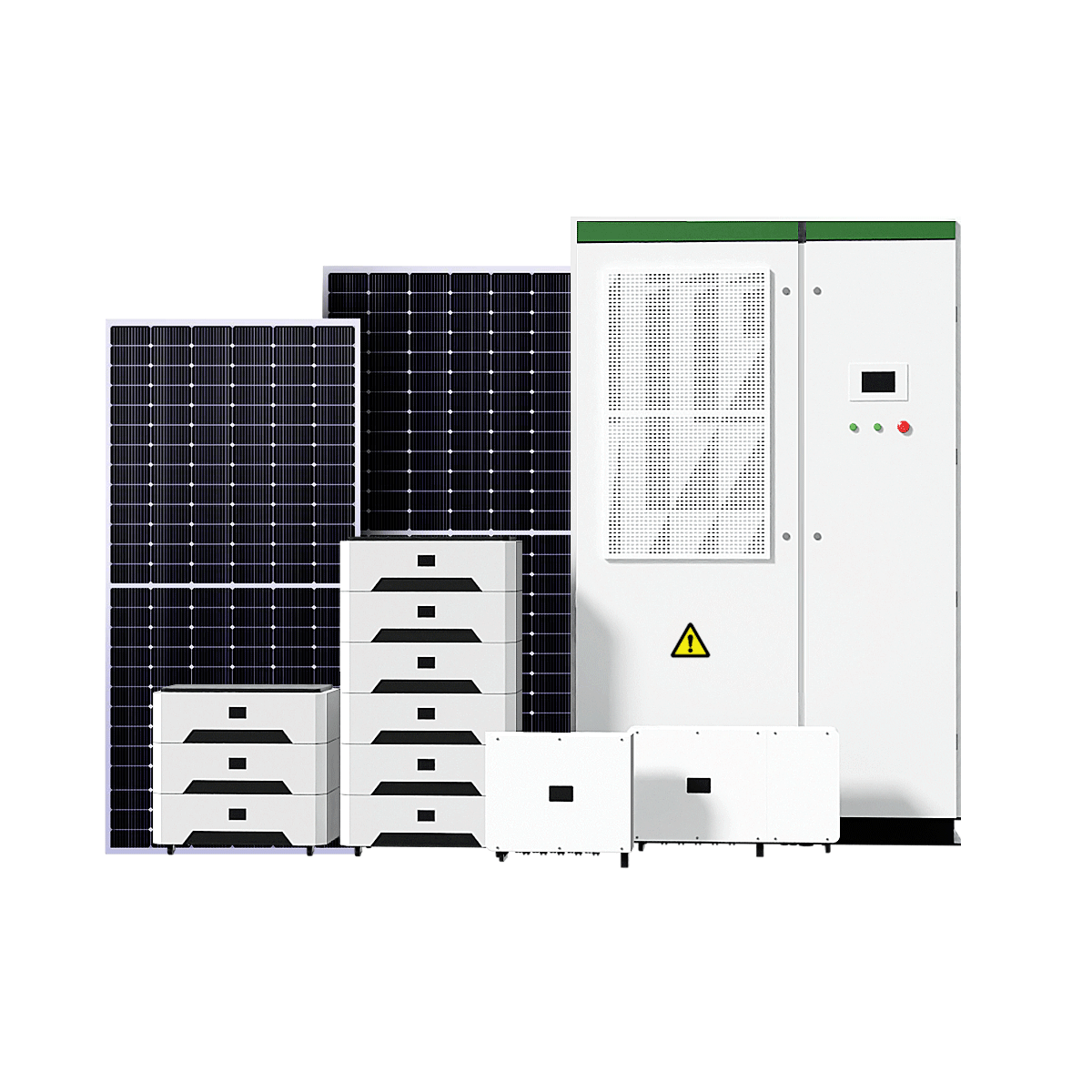
Every rooftop PV owner knows the shape of the problem. Generation peaks at noon, when nobody is home and nothing is drawing power. The surplus goes to the grid at a feed-in tariff of a few cents. Then the sun sets, the evening peak arrives, and the same household buys electricity back at several times that price.
That spread — between what you are paid for exporting and what you pay for importing — is the entire business case. And the fastest way to capture it is not a bigger battery. It is a heat pump that treats electricity as a raw material and stores the output as hot water.
This article explains the loop, why R290 heat pump with solar PV is the pairing that makes it work, and the one interface that decides whether your system can actually do it.
1. The problem: selling cheap, buying expensive
A PV array without storage has a timing problem, not a capacity problem. Two numbers define it:
- What the grid pays you for exported surplus — typically a few cents per kWh.
- What you avoid paying when the heat pump runs on your own generation — several times that.
The gap is what a “PV + storage + heat pump” system is built to earn. And the heat pump is not a passive load waiting for a signal: it is the component that can absorb surplus on demand and hold it as thermal energy, at a fraction of the cost of electrochemical storage.
That is the whole idea. The rest is plumbing, controls, and refrigerant choice.
2. What “PV + Storage + Heat Pump” actually is: four parts, one loop
The concept is a single energy management platform (HEMS) coordinating four pieces:
| Component | What it does | Its role in the system |
| PV array | Turns sunlight into electricity | Generation end — the daytime workhorse |
| Battery | Stores electricity | The system’s battery bank; shifts energy across time |
| R290 heat pump | Moves heat with electricity (heating / cooling / hot water) | The largest load and the heat reservoir |
| HEMS | Decides who uses which electricity, when | The system’s brain |
The control logic is simple:
- Daytime — PV drives the heat pump first; surplus charges the battery.
- Night and peak tariff — the battery discharges into the heat pump, avoiding expensive imports.
- Always — the heat pump is itself a thermal battery: storing heat in a buffer tank is far cheaper per kWh than storing it in lithium cells.
The economics are not theoretical. A “PV-storage-heat pump 3.0” system from one leading Chinese manufacturer reports roughly 30% lower electricity bills, with about 2 tonnes of CO2 avoided per unit per year. An R290 air-to-water zero-carbon concept shown at Canton Fair 2026 reported over 70% solar utilisation and a unit COP up to 5.6 (A+++).
3. Why R290 Heat Pump with Solar PV works better than R32 or R410A
A split system on R32 or R410A can be made to work. R290 simply fits the architecture in four specific ways.
1. Monoblock means a clean system boundary. Because R290 is A3 (flammable), almost every heating unit is a monoblock — the entire refrigerant circuit stays outdoors, and only water pipes enter the building. When you integrate PV and storage, you are coordinating one outdoor unit and one water tank. No indoor refrigerant pipework, no brazing on site, no cross-trade scheduling. Fewer joints, fewer leak paths, fewer failure points.
2. Full DC inverter tracks a fluctuating source. PV output rises and falls with cloud cover. An inverter-driven compressor modulates to whatever power is actually available — and part-load efficiency is exactly where R290 systems are strongest. A fixed-speed unit would either waste surplus or import at the wrong moment.
3. Smart control is factory-fitted, not retrofitted. Current-generation R290 units generally ship with Wi-Fi / 5G modules and a dispatch interface, connecting directly to SG-Ready and HEMS platforms. This is the difference between a system that can be commissioned in a day and one that needs a controls contractor.
4. Natural refrigerant plus PV approaches zero carbon. R290 has GWP ≈ 3 and ODP = 0. Paired with self-consumed solar, the carbon footprint of the whole supply chain drops toward zero — which is precisely the direction of the EU Green Deal, REPowerEU, and 2030 targets.
The short version: A3 safety forces a monoblock; a monoblock makes system integration simple; inverter drive and built-in controls make the unit dispatchable; the natural refrigerant makes the carbon accounting look good. R290 was not squeezed into PV systems. It was designed for them.
4. The core mechanism: SG-Ready and surplus heating
| Signal state | Meaning | What the heat pump does |
| State 0 | No signal / free running | Normal on-demand operation |
| State 1 | Economic mode (high price / grid stress) | Prioritise stored energy, reduce load, avoid the peak |
| State 2 | Forced mode (grid overload) | Short-term remote turndown or pause — demand response |
The reverse direction matters more, and it is the part most buyers overlook. When PV is generating a surplus, an SG-Ready heat pump automatically heats the buffer tank to its upper setpoint — converting electricity that cannot be sold into hot water and heating that is available whenever it is needed.
The thermodynamics are the argument. Water stores about 4.2 kJ per kg per kelvin. Storing 1 kWh of heat in a well-insulated tank costs a small fraction of storing 1 kWh in lithium. Hence the line you hear from installers: a heat pump’s water tank is the cheapest battery you can buy.
5. What this means for the homeowner
Look at self-consumption ratio, not installed kWp. Once a heat pump is in the loop, the goal stops being “generate more” and becomes “consume what you generate”. Shifting summer surplus into winter heat demand is the cheapest form of self-consumption available.
Payback is not just the electricity line. In the EU, PV and storage incentives stack with heat pump subsidies, and real payback runs well short of what a bill-only calculation suggests. The IEA’s 2026 assessment found that in 16 EU countries the lifecycle cost of a heat pump is already below that of a gas boiler, with favourable tariff structures saving up to €800 per year.
Your heat pump may become a power plant. Aggregate a few thousand SG-Ready units and you have a virtual power plant (VPP) — curtailed when the grid is stressed, absorbing when renewables oversupply, with owners earning frequency and capacity service fees. An R290 monoblock, with its simple structure and unified control, is one of the friendliest terminals a VPP can recruit.
6. Five-point checklist before you buy
Ask whether the unit has an SG-Ready or dispatch interface. Without it, surplus heating is a conversation, not a function.
Size the tank properly. It is your thermal battery — capacity determines how much surplus you can actually store.
Make the installer connect the HEMS to the PV inverter. Installed but unlinked is the most common wasted purchase in this category.
Compare your retail tariff against your feed-in tariff. The wider the gap, the more self-consumption is worth.
Prefer an R290 monoblock. Simpler system, better carbon accounting, ready for VPP aggregation.
7. Conclusion
An R290 heat pump with solar is not about saving a little more electricity. It is about which electricity you use, and when.
When an A3-safety monoblock meets PV and storage, the heat pump stops being a heating appliance and becomes the hub of the home energy system: sunlight in by day, stored energy at night, surplus converted to hot water — and, before long, a service fee for helping the grid balance itself.
FAQ
Can an R290 heat pump run directly from existing rooftop PV? Yes, provided the unit has an SG-Ready or equivalent dispatch interface and the HEMS is linked to the PV inverter. Without that link, the heat pump runs on whatever the meter sees and captures none of the surplus.
How much can a PV + storage + heat pump system actually save? Optimised systems report roughly 30% lower electricity bills, but the figure depends almost entirely on the gap between your retail tariff and your feed-in tariff, plus how much tank capacity you have to absorb surplus.
Do I need a battery, or is the heat pump enough? Not necessarily. Thermal storage in a buffer tank is the cheapest first step and covers most of the load-shifting benefit for heating and hot water. A battery extends the benefit to other household loads.
Why R290 rather than R32 or R410A? Three reasons: monoblock architecture keeps the refrigerant circuit outdoors and simplifies integration; inverter drive with strong part-load efficiency matches fluctuating PV output; and GWP ≈ 3 with ODP = 0 keeps the carbon accounting clean.
Linuo Ritter manufactures R290 monoblock air-to-water heat pumps with factory-fitted SG-Ready dispatch interfaces for PV, storage and HEMS integration. Contact our engineering team for system design support and model-specific performance data.


